4 Books New Grads Should Have Read BEFORE Finishing School

Students in undergraduate and professional school usually have one thing on their minds: sleep!  The next thing is usually studying to do your best (or to just stay afloat) in your respective program.  Many times this requires a laser like focus where nothing else matters except the next test or practical.

But on the other side of that diploma or degree, real life is going to be waiting.  Which means you are going to have to make a lot of financial decisions which could potentially affect the rest of your life.  I would advise students to take a few minutes a week (that’s really all it takes) to read some good books and form some type of financial plan.

I’ve recommended four books for students to read while they’re in school.  Like I said, it just takes a few minutes a week and I know every student can find a few minutes between ping pong tournaments (and studying of course!)

These are light reads that are packed with great information to get you started on the right financial footing.

Good grades are important, but you’re only in school for a small part of your life.  Taking some time to plan the rest of your life is essential.

Here are the recommended books:

I Will Teach You to Be Rich by Ramit Sethi
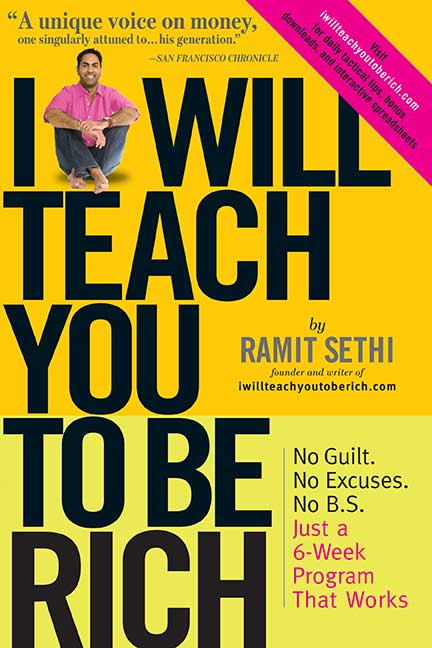
This is the first book i read after graduating optometry school.  And I’m glad I did.  It touches on some theory when it comes to investing, but it is ultimately a very practical book and this is what I appreciated about it.  Ramit talks about what specific bank accounts he recommends, how to invest and even how to negotiate when buying a car.  The overarching theme from this book is to DO SOMETHING rather than not acting.  Getting 80% of the way there is a whole lot better than getting 0%.

The Millionaire Next Door by Thomas Stanley and William Danko

If there ever was a book out there that tells you what REAL wealth looks like, this is it.  MND is a light read that talks about the characteristics of real life millionaires.  Despite what society and the media tells us, millionaires don’t usually drive around in luxury cars and have gigantic houses.  More often than not they are hard working people who spend their money very wisely for a long time.  This book is especially important for those new grads looking to get a new car and/or house right away.  If you want to be a millionaire, this book will show you that’s just not the way to go.

Richest Man in Babylon by George Clason

I was fortunate to read this book while I was in optometry school, and I’m really glad I did.  It is a light and short read that can help establish a solid financial foundation.  The book consists of Biblical sounding parables that contain financial wisdom.  The main theme I got from this book is the biggest financial lesson of all: you will never get ahead unless you spend less than you earn.  Constantly spending 100% of your earnings is no life at all.

The White Coat Investor by James Dahle MD

This is a great book geared mainly to MD’s and other health professionals, but has some great advice for everyone.  The White Coat Investor is a fantastic blog that teaches professionals about student loans, investing and keeping more of your money.  Honestly, it is one of the blogs that inspired me to start blogging and trying to help my fellow broke professionals.  Great book for investors and a must have for anyone graduating from professional school.

Share

Everyone Should Consider Student Loan Refinancing

Unshackle your life

Unshackle your life

Few opportunities in life will allow you to keep more of your own money year after year with very little work on your part.

You can call your cable company to negotiate a better price.  That can save you $50 bucks or so per month.  But you have to look for new deals every few years and stay on top of the company to make sure they don’t tack on any extras.

Negotiating down a price for a car is another example.  You can potentially save thousands of dollars off the sticker price, but cars go way down in value anyway and you have to rinse and repeat when it’s time to buy another one.

These are both great ways to save money but do require a good amount upfront work and some checking in to make sure you’re not getting fleeced.

But for recent graduates with student loan debt, there is an even better way to create perpetual savings with very little work or maintenance:

Refinance your student loans.

Why You Should Consider Refinancing

Student loans are a big problem in this country.  While student loan interest rates are not nearly as high and murderous as credit card rates, a LOT of people are saddled with student loan debt and the amount of debt is pretty high.  Professional school debt can easily get into six digits (hence, The Broke Professional)

How high?  About $1.3 trillion.  You can even see it go up every second if you have some free time.  Pretty cool.  But also NOT COOL.

The other big issue is that it can take time for many graduates to actually get their careers going.  But lenders really don’t care.  They will give a few months grace period and then you need to start paying.

There also used to be a time when student loan interest rates were really low.  During my undergraduate years in the early 2000’s they hovered around 1-2%.  Now the rates are around 5-7% or even higher depending on the type of loans you take out.

So higher rates and higher balances that affect a large chunk of the population.  This is a problem.

Student loan refinancing is a great potential solution.  While it may not be the final solution for everyone (some value the various government benefits that come with federal loans), every single person with student loan debt needs to look into refinancing.

Refinancing may not be the right option for everyone.  But it doesn’t hurt to get some quotes and find out!

Benefits of Refinancing

Some people are a little confused about what a student loan refinance is.  Really simply, the company you decide to refinance with will send a check to your original lenders and pay off your loans.  You are now a customer of the refinancing company and you have to make payments to them.

Pretty simple, but what are the benefits of moving your debt from one entity to another?  There are many, but the biggest benefit is that you will (most likely) be paying much less in interest payments over the life of the loan.  The bigger the interest rate difference from your original lender and your new lender, the more beneficial refinancing will be for you.

Depending on the interest rate difference and the amount of your balance, you can potentially save a lot of money.

As a real life example, let me walk you through how much I saved with my refinance.  Since my time in school spanned some interest rate changes, I had some loans with lower rates and some with higher rates.

I decided it would be most beneficial to refinance my one loan which had a higher interest rate than the rest and had the largest balance as well.  Let’s do some simple math to check out the savings I received:

Original loan:  $36,667 @6.8% interest

Original term:  25 years

Total payments:  $76,346 ($39,679 interest)

That’s a long time to be in debt and a lot of extra interest to pay.  Now here are the terms of the refinanced loan:

Refinanced loan:  $36,667 @3.45% interest

Refinanced term: 20 years

Total payments:  $50,811 ($14,144 interest)

So over the life of the loan, I would end up saving $25,535 in interest payments!

With the refinanced loan, I had the option of a 5, 10 or 20 year term.  For the sake of the example I showed the 20 year term since the monthly payments were just slightly higher than the original loan.

Simply getting a lower interest rate with pretty much the same monthly payment would save me about $25,000 over the life of the loan!

But I want to get out of debt quick, so I went with the 5 year option since I could handle the increased monthly payment.  Going with this option will save me $36,374 in total payments.  I’m liking the sound of that.

I only had one loan with an interest rate of 6.8%.  Graduates nowadays have multiple loans with interest rates around 6%.  Being able to refinance their entire balance with an interest rate cut in half can produce significant savings.

Another great benefit of going with a new company to refinance your student loans is better customer service.

I’ve dealt with a number of refinance companies and every single one had better customer service than my original lender, whose customer service is almost non-existent.

My original lender would do shady things like apply extra payments towards interest and not the principal, even though I specifically asked them not to.  And it took forever to get a live person on the phone.

Many of these new refinance companies are young and growing, so they put customer service at the forefront of their business plan.  My two favorite companies, SoFi and Earnest, have phenomenal customer service and very user friendly websites.

Who Should I Refinance With?

There are a lot of student loan refinance companies popping up nowadays, but the two that are at the top of the industry and that I highly recommend are Earnest and SoFi.  They are essentially 1 and 1A.

If you’re already convinced and want to get the refinance train moving, click here to get a quote from Earnest, the company that ultimately got my business on my first refinance.  (If you end up getting approved for a refinance by using this link, we both get a $200 bonus)

I also recommend clicking through SoFi, as they have slightly different underwriting standards and you may receive different quotes from either.  (If you use this link and get approved, you will get a $100 bonus)

I would suggest comparing the two and going with the company that gives you the most favorable rate.  They are both very good.

If you still need a little more hand holding, my next post will detail the step by step process of refinancing your student loans and I will tell you why I went with Earnest for my first student loan refinance.

Until then, get some quotes and save some money!

Share

Educating from the Exam Room to the Blogosphere

Blogging is not as easy as most people make it out to be. It takes consistent time and effort to produce a quality blog, let alone one that makes some money.

But the most important thing needed to become a successful blogger is passion for your subject. Dr. Jennifer Lyerly, a fellow optometrist from North Carolina, blogs about various issues in the field of optometry. Her knowledge and passion for the profession is evident from every post she puts up on her blog, Eyedolatry.

I asked Dr Lyerly some questions about her life and blogging career. Read on to learn more about what drives Dr Lyerly to produce consistent quality content for fellow optometrists and anyone looking to learn more about the profession:

Tell me a little about yourself and your career:

profile

I graduated from the Southern College of Optometry in 2011 and started blogging right after graduation. I’ve been working in group private practices since graduating, and I’ve found I really enjoy working with a team of doctors and having a personal relationship with a boss who is also an optometrist. I’m constantly learning from doctors with more experience where I work at Triangle Visions Optometry, and I also feel like I bring something new and insightful to the table as a millennial doctor on the team.

When and why did you start blogging and who is your primary audience?

I was studying to take North Carolina boards, and also organizing my thoughts on patient care for my first job when I decided to write my first blog post. The blog was a great way to think about a topic and work out how I would describe a medical condition or an optics question to a patient. Most readers on my blog are curious patients, wanting to learn more about their eyes. Since I’ve been putting more focus on women’s issues in optometry, I have seen a huge influx of readers that are new graduates and student ODs. My goal is to make the blog informative to people with various levels of education in eyecare, so that an optometrist, a student, and someone completely inexperienced with our profession would all feel like they took away valuable information from a post.

How do you manage your time between blogging and seeing patients?

It’s difficult! My rule is that I never mix blogging with work. At work I see patients and am a doctor only. When I leave the office, I don’t take home patient care so I’m free to work on anything I want. I try to write 1 good quality post a week. More than that, and I just don’t have time to research and edit enough to feel like I’m delivering quality information.

What has been the biggest challenge in your blogging career?

Dealing with criticism has been tough. When you put yourself out there, you’re going to have people who don’t agree with you. I’ve had a surprising number of people criticize my support of daily contact lenses on the blog, or leave a comment meant to insult me or belittle me about “not being a real doctor.” I was even blocked on Facebook for a few months when someone upset about how many posts I’ve done about daily disposable contact lenses (they wear their Biomedics contact lenses 4-5 months at a time and are just fine!!) reported me as a bad URL.

Any negative feedback I get just drives me to want to write better and better articles. The world is largely uninformed about what we do as optometrists and what is true about their eye health, and I feel like my blog gives patients at least one place where they can get true, medically supported information. Not everyone will agree with the science, but that doesn’t mean they don’t need to hear it.

If you could give some advice to your first year optometry school self, what would you tell her?

I was so focused on classroom excellence in school, I didn’t participate in leadership groups as much as I should have. Looking back now, optometry school is truly a place of social connections as much as learning. As a natural introvert, it took me being out of school and having to talk to new people every 20 minutes in patient care to realize that making connections with people isn’t scary or intimidating — it’s actually pretty easy and very rewarding. I’ve almost become an extrovert at this point and life is so much more fun this way!

What are some of the major challenges that young optometrists face nowadays?

Where I practice in North Carolina, the choices of where to work seem to be getting smaller and smaller every year. Our industry is going through major ownership consolidation and I fear that lack of competition and choice for where to work will drive down our salaries and our quality of life as doctors. Negotiating what you want is essential from your very first contract – not just for you, but for every doctor that comes after you. We have to stand up for what our education and skills are worth.

Have you always enjoyed writing?

In elementary school, I wanted to become an author when I grew up. I haven’t written a book (fail), but blog – author has to count for something.

Are there any blogs you visit regularly?

With industry blogs I consistently read Eye See Euphoria, Maino’s Memos, Eyecing on the Cake, Optomly, and of course, The Broke Professional.

Where do you see yourself professionally in 5 years?

I plan to keep practicing, blogging, speaking, and serving the profession of optometry in anyway that I can. I’m passionate about the success of our profession and I am excited about any opportunity I get to make our future brighter. I hope in 5 years I can look back and feel like I’ve been making a difference in our profession, no matter how small the impact is.

Where do you see your blog in 5 years?

I started the blog as a way to supplement my learning, and I can’t picture a time where there isn’t a topic I want to learn more about. But in addition to educational articles, I also want to use the blog to help our profession. I want to work with companies and industry leaders for the next generation of young female ODs to champion the future of our industry. I’m really passionate about making private practice survive in optometry, and embracing social media is the best way for independent doctors to compete with large corporate entities — you need a personal, unique presence and you need to connect with people!

Through the blog and the social media experience I’ve had, I’ve also started a new business with Dr. Glover at Eye See Euphoria where we are offering social media management for exclusively optometrists at Defocus Media. It’s impossible to know what the social media landscape will be in 5 years, but I want to be right there, representing optometry and connecting with other doctors and patients to grow our profession.

What is your favorite book?

This is always a hard question for me — I love reading and there are so many books that have spoken to me. I really love The Bell Jar by Sylvia Plath because I think many young women go through the feelings the main character has in that book — feeling confused about what and who you’re supposed to become and how you’re supposed to do it all, feeling like what you’re creating or delivering to the world is not valued. Knowing other women before me were overwhelmed with expectations from society, their families, and themselves makes me feel more comfortable with imperfection and not being able to do it all.

What do you enjoy doing when you’re not blogging or seeing patients?

Traveling, eating, and dancing at weddings. Being married to my best friend, I feel like we are always planning our next adventure.

Any words of advice for young professionals seeking to make an online presence?

Don’t judge your worth by the number of readers or number of followers you have. Don’t judge your worth by one person’s negative comment. If you look at what you’re doing online, be it blogging or on social media, and you are proud of it, then you are success! And you know what, if you’re producing good content, your readership and followers will grow naturally anyway.

Big thanks to Dr Lyerly for the interview and giving some insight on what it takes to build a successful blog while holding down a full time job.

Her blog is called Eyedolatry.  Check it out for consistent quality information about eye conditions and the field of optometry.

Share

How to Get an Amazing Return on your Savings Account

Savings accounts will save your life.

The financial services industry is enormous.  There are countless magazines, commercials, shows and blogs that talk about financial products and services (I do that also, but only with products I use and trust.  Like Digit.)

Companies like Fidelity , Vanguard and Charles Schwab will talk about their mutual fund options all day long.  Life insurance companies will be happy to show you their complex whole life insurance and annuity plans.  If you turn on any business news channel, you’ll start believing that the world is going to end and you need to entrust your financial life to a specific company.

All of this marketing is designed to separate you from your money, and will ultimately enrich the companies in the form of fees and commissions, regardless of your own personal performance.  Marketing is a powerful tool and the odds are stacked against the average consumer.

But what if I told you there is a financial product available that is virtually risk free and will give you great returns throughout your entire life?  This product is not heavily advertised in the financial world and will only get a cursory mention by financial advisers.

That product is the humble emergency savings account.

Savings account?  Really?

Yes really.  And it has nothing to do with the interest rate.

Most people have savings accounts and don’t even know it.  Many banks sign you up for one when you get their checking account, although most people don’t give it a second thought. But they can be a powerful wealth building tool.  How can that be when the interest rates are so low?

A savings account with Bank of America will get you a maximum interest rate of .03%  That’s right, 3 hundreths of a percent.  Almost nothing.

An online savings account with Ally, which I currently use, gives a 1% interest rate.  A LOT higher compared to a Bank of America account, but still not too high in the grand scheme of things.

(By the way, sign up for an online savings account if you don’t have one.  You’re just leaving money on the table if you don’t)

The beauty of a savings account doesn’t lie in the interest rate.  Savings accounts are awesome because they can enhance your financial life by providing positive returns in so many ways.  Here are some examples:

Higher deductibles:  Insurance is a game of risk.  This is true for any type of insurance, including health, auto and homeowners.  If you take on more risk, you pay less in premiums to the insurance company.  If you take on less risk, you pay more in premiums.

Assuming coverage remains the same, the best way to take on more risk, and thus decrease your premiums, is by increasing your deductible.  This will be how much you pay out of pocket before the insurance company starts paying.  The higher deductible you pay, the lower premiums you pay.

What a large savings account does is that it allows you to set a higher deductible because you will be able to cover that deductible payment if need be.  I believe the role of insurance is to help you out in catastrophic cases, such as a car accident or major illness.  In the case of a car accident, having a low $100 deductible is not really a big benefit since the cost of replacing a car can run well into the tens of thousands.

For example, I have car insurance with Geico.  If I choose a $1,000 deductible on one of my cars, which is an amount any decent savings account should have, my 6 month premium is $285.  Not bad at all.  If I leave the coverage the same and change the deductible amount to $100, the 6 month premium jumps to $395.

An extra $110 for 6 months is not bad, but if you have a large savings account, there is no need to spend that extra money.  Apply this principle to all your cars and all of your various insurances (especially your health plan), and you can easily save hundreds of dollars per month just for having money in a savings account to cover those deductible payments.

Bulk Purchases:  This is an easy one.  Buying in bulk is almost always cheaper than not, especially with groceries.  And having money in the bank allows you to do this anytime you want.

If you see something you regularly purchase on sale at the grocery store for half off, you can save a lot of money by buying enough of that item to last you for the month instead of coming back every week and paying the regular price again.

Your savings account just helped you slash your grocery bill.

Pay in cash:  With things like cars, home repairs, remodeling and appliances, most people just assume you have to take out a loan.  That’s just how things are done.  But not if you have cash in your savings account.

We recently got an estimate for a painting job from a number of contractors.  All the estimates were for about $1,000.  Since I will be paying in cash, this will be an easy transaction.  Just transfer from my savings account and pay the contractor.

Most people go would go the loan route.  A good rate for a personal loan would be 6%.  If I could get a 6% loan with a 5 year term, the monthly payment would be $19.33.  What a steal!

Actually, not a steal at all.  The extra interest you would pay over the 5 years would be $159.97.  So having a savings account that could cover that amount right off the bat will save me $160 compared to having to take out a loan.

Leave investments alone:  This is where having a savings account can potentially help you keep a whole lot of your money.  Everyone needs to invest whatever they can as early as they can.  Compounding interest early in life produces great returns later.  This has been proven extensively.

But what if you have been investing so much that you totally neglect your savings account and now you owe someone $5,000?  You’re going to have to tap your investments which is going to cost you in 2 ways:  Transaction costs and diminished investment returns.

If you have to withdraw from a retirement account, add a penalty payment and extra income tax on top of that.  And all the while you are missing out on returns your $5,000 could have been getting if it remained invested.  Not a good situation.

So even if you’re the most gung-ho investor and you’re super excited to get in the game, make sure to set aside some cash just in case.  It will actually help you keep more of your money.

With all the savings to be had from higher deductibles, bulk purchases, not having to get a personal loan or withdraw from your investments, I hope you’re convinced that having cash set aside in a savings account is a good idea.

I hear many people rail against savings accounts because of the low interest rates and how the “opportunity cost” is too high since you could be getting a higher rate of return elsewhere.  But no other account allows you to withdraw money as needed and gives you the peace of mind found in all the previous examples.

So help keep your financial house in order and open an online savings account.  Make sure to keep replenishing it because it is not a matter of if you’ll need it, but when you’ll need it.

Share

Wealth Savings Account

Another Health Savings Account post?  Yes.  Another one.

HSA post. Another one.

HSA post. Another one.  Another one.

I’ve written about HSA’s previously here and here.  But it seems some people still don’t get it.Since HSA’s are a fairly new concept, I thought I would give one more post at explaining its benefits.

Many people I’ve spoken with who are hesitant about HSA’s are not really hesitant about HSA’s.  There is no reason to be scared of HSA’s because they provide tax free money for healthcare services AND you can keep the money forever.  People love signing up for Flexible Spending Accounts, and you can only use those funds within a year, so those are a little more scary.

No, people don’t have problems with HSA’s themselves, but have second thoughts about signing up for High Deductible Health Plans (HDHP’s), which you have to be enrolled in to be eligible for an HSA.

And they should have second thoughts.  HDHP’s are a big difference from the traditional health plans we’re used to.  You’ll have to pay out of pocket and in full for a lot of things you never had to pay directly for.

A visit to the local urgent care place?  Full price.  Have to pick up some medications?  No coverage yet.  A $1,000 visit to the ER?  Pay the full $1,000.  It’s almost like not having health insurance at all!  (It really isn’t though just keep reading.)

For a family plan in 2016, the minimum deductible needed to be considered an HDHP is $2,600.  That means that insurance will not cover anything until you have spent $2,600 on healthcare expenses for the year.  That sounds preposterous for some people, but it just requires you to plan a little better.

Are HDHP’s for you?

There are two questions you have to ask yourself to see if a HDHP is right for you.

First, are you pretty healthy?  That is, do you or any family member need to go to the doctor often or take a lot of medications.  If the answer is yes, then a HDHP is probably not for you.

But it still may be.  You just have to run the numbers.  It’s almost impossible to predict what your healthcare costs will be in the upcoming year, but looking at how much you spent in previous years can give you a good idea.

HDHP’s have lower monthly premiums than traditional health plans.  That’s one of their big selling points.  If you think you will end up spending enough on healthcare that it will negate those lower premiums, then you should probably go with a traditional plan.

The second question to ask yourself is do you plan to have a surgery or major procedure anytime soon?  If you do and you can do it early in the year, then an HDHP will DEFINITELY be the right choice as you will meet the deductible requirement early in the year and will have almost everything covered for the remainder of the year.

Not all companies accept will let certain elective procedures, like LASIK, be applied to the deductible so make sure to verify what will apply and what won’t.  If it can apply towards the deductible, an HDHP is a no-brainer.

Based on these two questions, I think most people will benefit from going with an HDHP.  So you get much lower premiums, great coverage once you meet the deductible and the biggest benefit of them all…the HSA!

Healthy, Wealthy and Wise

The minimum deductible for an HDHP family plan is $2,600.  The maximum amount you can contribute to an HSA  for 2016 is $6,750.  That means if you max out your HSA contributions for the year (which you should most definitely try to do) and get the pre tax contributions out of your paycheck, you will be able to fully cover the deductible in a little less than 5 months.  Doesn’t get much easier than that.

Remember HSA’s have a triple tax advantage: they are taken out pre tax, they grow tax deferred, and they can be withdrawn tax free for healthcare expenses.  After age 65, you can withdraw funds for any reason and you’ll owe income tax but no penalty.  Since HDHP’s cost much less for employers, many will sweeten the deal by contributing a certain amount into your HSA.

There is just too much good stuff going on here.

And let’s not forget arguably the biggest benefit: the ability for the account to grow tax free.  The default setting for most accounts is to have your HSA money in some type of money market account that earns 1% or less of interest.

That’s cute, but it’s not for me.  Nearly all HSA plans have investment options, and some of them have very good ones.  HSA’s stay with you for life, so if you can invest your funds appropriately you can stand to make a lot of money down the road.

Many would say that’s risky since the money is for healthcare expenses and not necessarily for retirement.  Fine.  What you can do (and this is what I do), is to find out what the out of pocket maximum of your health plan is.  This is the max amount you would have to pay for the year until all of your healthcare expenses are completely covered.

For most HDHP’s, this  number is around $6,500 or $7,000.  Whatever the exact amount is, put that much in the interest bearing portion of your HSA.  Put the rest into investments.  That way, even if everything goes to hell, you will have enough to cover your health care expenses for the year while still having some great tax advantaged growth in the background.

Bottom line, if you’re healthy and single, you have absolutely no reason NOT to be in a HDHP.  If you have a family there is more to consider, but an HDHP will most likely work.  If you have a family and multiple members see doctors and take medications regularly, it may not be right for you.

I don’t know what more I can say about the topic, but I’m sure I’ll revisit it again soon.  In the meantime, max out that HSA contribution!

Share

Find Your New Financial Normal

Make a few adjustments, and create a new financial normal.

Make a few adjustments, and create a new financial normal.

One thing I’ve noticed over time is that humans are very adaptable creatures.  We conform to our surroundings and can make almost any environment feel routine to us after a while.  Animals do this, as cold weather creatures develop features that can increase survival in even the most harsh of environments.

Call it evolution, adaptation or just the way God made us.  The fact is that we can adapt to most situations and environments given enough time and motivation.  Knowing this, we should theoretically be able to improve our financial situation by changing our environment.

We can get by on less

I was accepted into optometry school fairly late into the process, so I had to scramble to find an apartment near the school.  I asked a couple of people I knew if they needed roommates.  No one did.  I started looking for one bedroom apartments in the area but they were way out of my student salary (aka no money).  I was at a loss.

But then I had an idea.  I called back one of my classmates and asked if I could stay in their living room.  He wasn’t planning on bringing any furniture in the living room and neither was his roommate, so he said that would work.  I just got an air mattress and set up shop.  So I had a place to eat and sleep and paid very little rent since we split it 3 ways (I got to pay even less since I didn’t have my own room).

It was tough the first few days.  One bathroom for three guys.  Not much privacy being in the wide open living room.  Not an ideal living situation.

But I made some adjustments to make things easier.  I spent most of my time studying in the library.  Since studying is what I did almost all the time anyway, I just brought some food from home and ate during study breaks.  It became very doable and I made a couple of good friends in the process.  All for hundreds of dollars less per month than if I got my own apartment.

What this experience showed me is that you can get by on less, even if you don’t think you can.  Sometimes we are forced to get by on less because of a job loss or illness.  Those aren’t fun times.  The time to experiment is while you’re healthy and making money.

Cut your cable and see how things go.  Look at some smaller fuel efficient cars when it’s time for a new one.  Try to eat out a little less every week.  Doing things like this will create a new baseline of spending and you may not even notice the difference after a while.

And if you do start feeling the pinch, then you know that particular thing is something you value and can’t live without.  Simply go back to it and try to cut something else.  Not much to lose there.  This process will save you some money for sure but will also simplify your life just a little more.

Create a New Normal

Cutting expenses is all well and good, but how can we use our adaptability to actually save money and supercharge our finances?

The most recent numbers put the US personal savings rate at 5.2%.  The savings rate for the Millennial generation is actually negative!  These are abysmal numbers and unless the average American is making millions of dollars a year, a 5% savings rate is just not going to cut it!  Your working career could end prematurely because of health issues or job loss, so making sure you have enough savings (and insurance) is key.

So what’s the answer?  Move to a cheaper area?  Cut your cable?  Stop drinking lattes?  All of these are viable solutions to keep more of your money, but probably are not the answer for most people.  The answer?

Create a new normal.

If you’ve only been saving 3% of your salary into your 401(k), log into your account and increase it to 6% and try to live on your new slightly less monthly earnings.  You will make less money than before obviously, but through our awesome ability of adaptation, you will most likely get used to it after a few weeks.

You just doubled your savings rate.

After a while, consider increasing your 401(k) deferral again, especially if you get a raise.  You might find increasing it too much is making things a little tight.

That’s okay.  You can back it down a little bit and increase it later when you’re ready.  More than likely you will end up at a much higher savings rate than you started with.

You can apply this to any almost any financial goal.  Want to pay off your student loans quicker?  Increase your payment to principal by $200 every month and see if you can handle it.  Want a larger emergency fund?  Try to set an automatic contribution to take $100 out of your checking account.

After getting used to your new financial reality, you can try to see if you can save some more.  Make it into a game.  And just like a game, you can push reset if things don’t seem to be going so well.

Most of us underestimate our ability to adapt to new and possibly harsh situations.  Try to create a new financial normal for yourself by cutting a service you don’t need or increasing your savings rate.  You’ll be surprised at how easily you can adapt.

Share

Keeping Up to Date Can Cost You

Don't end up shaped like the number 7

Don’t end up shaped like the number 7

Most of us will not admit it, but we know what FOMO means (Fear Of Missing Out).  Not only do most of us know what it means, we probably fall prey to it from time to time, especially in our current era of social media hyper consumption.

There was actually a time when we had to call someone to find out when a plane would leave.  That just sounds barbaric.  Now we can get up to the minute (second? millisecond?) flight information, sports scores and weather reports.  There is nothing the world can hide from us!

This constant state of connection also translates into the financial world.  We can get up to the second stocks reports on any company, and trades are performed almost continuously.  While this can seem exciting and adrenaline pumping, it can also lead you to unwittingly destroy your finances.

Get Off Your Phone Dad

Smartphones come preloaded with a “stocks” app that gives you up to the second numbers on the major indices and any individual stocks you choose. The problem is that humans are emotional beings, and seeing that line go lower than it was earlier in the day can produce feelings of anxiety that make us want to reach for the panic button and sell.

If we’re investing for things that are decades away, daily fluctuations in the market shouldn’t faze us in the least bit.  But they do.  So removing ourselves from constantly having to look at prices is the only way to go.

It’s also important to remember that stocks appreciate an average of 8% per year, but if you focus on daily fluctuations and react to news of the latest downturn, you will miss those great returns.

This is not to say we should be totally oblivious to our investment performance.  I personally like to take a look every 3 months to readjust my allocation back to where it should be and just check up on the numbers.

Notice I said every 3 months and not every 3 minutes. That’s because daily fluctuations tell you next to nothing, and are only giving you one piece of a thousand piece puzzle. Figuring out where all these pieces of the puzzle go and formulating your long term investment plan is something you need to do.

The other important thing to remember is that the markets will go up and they will go down. That’s just what they do.  So a sudden downturn should not surprise you.  In some cases a downturn could be just what the doctor ordered because you can buy shares for less than you could before.  That will get you on the rocket ship to big returns once the next upswing occurs.

Not only are equities cheaper during a downturn, but dividends can get a little better in some cases as well.  That should help lessen the impact of any negative returns.  Just remember to re-invest those dividends right away for maximum compounding.

While having all the information the markets have to offer available at your fingertips seems like a technological breakthrough, just looking at it for the sake of consuming information can be very detrimental to your returns.

Keep a cool head and do whatever it takes to stop you from pulling the trigger.  If that means turning off the computer for a bit or chatting with your financial advisor, then that’s what you’ll have to do.  Taking advantage of the ups as well as the downs is an essential characteristic for any successful investor.

Share

Financial Lessons Learned During a Blizzard

My Sunday/Monday/Tuesday workout

My Sunday/Monday/Tuesday workout

The East Coast is now recovering and digging out from one of the worst blizzards it has seen in years.  In the MD/DC/VA area we got the brunt of it, so digging out has been a process for sure.

While being at home with my family for days was fun, cabin fever started to set in after a while, especially with my 3 year old son.  He begged us to take him to the nearby park which was covered in snow and he absolutely loved it!

It was an interesting and sometimes character building experience trying to dig ourselves out.  I saw the spectrum of humanity out there.  From neighbors helping each other shovel out of their driveways to guys taking selfies of themselves in their clean driveways and not lifting a finger to help others in need right next door.

Shoveling snow is kind of a cathartic experience because things are very quiet and still all around.  And all you’re left with is your thoughts while repetitively shoveling and pushing snow around.

In between thinking about my mortality and wondering if we had enough eggs to last the next few days, I did draw some financial analogies related to the blizzard:

1.  Debt keeps you from moving forward

Seeing the magnitude of the storm when it was finished and how helpless everything looked, I realized that this is what debt can do to your financial life.  If you have debt lying around all around you, it becomes very difficult to just take a step towards financial freedom.

Once you can stop the debt from piling on, the next action step should be to get rid of that crushing debt so you can actually move on and advance with your life.  Which brings me to my next realization:

2.  Large goals are best completed in stages

Once I got my gear on and opened the door to take a look outside, it was incredible to see how much snow there was.  My Corolla was almost completely covered and the mounds of snow in the driveway and on the sidewalk were enormous.  I thought to myself that we’re never going to be able to get out of this.

But once I started working, I just made a goal to clear off certain sections and take breaks every so often.  Before I knew it, I had most of the driveway clean that day and two days later the car is able to get out and the sidewalk is passable.

This concept can be applied to pretty much anything in life, be it paying off debt or starting a new business.  The final goal can seem daunting and even unattainable at first, but if you break it up into smaller goals and work on them consistently, the end goal will become much clearer.

3.  Focus on your own situation and don’t keep up with the Joneses

It’s interesting to see how differently people approach shoveling.  Some perfectly healthy people can’t be bothered and will hire somebody to clean.  Some people are out during the storm itself and to get a head start.  And some people just wait until the plows come by to get started.

People also have different levels of preparation.  Some are using their rickety old shovels that have lasted them for years.  Others are eager to start up their brand new snowblowers.  Everyone has different situations but my philosophy is to do what you can with your situation and help those who need it.

If you were unprepared for this storm, just do what you can and prepare better for the next storm.  Financially, constantly having your eyes towards those who have more will just make you feel worse and affect how you deal with your current situation.

4.  Having a partner helps.  A LOT.

Shoveling snow by yourself is repetitive, boring and time consuming.  I noticed when I had one or two more people helping, all with the same goal, things were just more fun and work got done more effectively.  Even if one of the other people was my 3 year old son with a sand shovel, it was still fun having him out there.

In the same way, I think it’s important to have a partner when it comes to your finances.  This could be an accountability partner, a spouse who is on the same page or just a friend who enjoys talking about finances (I’m taking applications if you’re looking for one.)

There’s a nice synergy that is created when you’re working with someone towards the same goal.  You feed off of each other and new ideas can be found during the journey.

Luckily the forecast is calling for temperatures to be in the mid 40’s this week, so hopefully we will have a lot less snow to contend with this time next week.

Now only if there was an act of God that could evaporate everyone’s student loan debt…

Share

How I Increased My Net Worth by $70K with One Click!

Where have you been all my life??!!

Where have you been all my life??!!

It has been a long time since I wrote about net worth (2 years!!).

Looking back at that awkwardly written article, my views on net worth have changed a little since then and I started doing something big when it comes to my own net worth: actually tracking it!

Automatic or Manual?

Tracking your net worth is important because it gives you a look at how you’re doing with your finances over the long term.  Just like any business wants to see that profits chart trending upward over time, you want to see your net worth trending up too.

I’ve checked in on my net worth from time to time, but never as a regular exercise where I could actually gain some useful information from.  I started tracking it regularly a year or so ago.

Many bloggers recommend using websites like Mint and Personal Capital to track their expenses and net worth.  With these sites you link your accounts (checking, savings, loans etc) and they will give you one handy place to look at your income, expenses net worth.

While both of these websites are good in their own ways, they ultimately didn’t do it for me when it came to tracking net worth.

I gave up Mint a few years ago because it was becoming a chore to properly categorize all my transactions and it wouldn’t automatically update some of my student loan accounts.

I then switched to Personal Capital and have actually been using it for a couple of years to track my net worth and it worked great.  But again there was an issue with some accounts not updating and it wasn’t able to link to one of my student loan accounts.

So then I took the (relatively) drastic step of figuring out my net worth by hand.  Or by keyboard.  And it has made all the difference in the world.  While logging into my various accounts and noting down the net worth is more time consuming than just having a robot do it, I do find some advantages from manually calculating my net worth:

  • It gives me a better overall impression of my financial situation.
  • I can pick up any mistakes.  Since doing manual entry 3 months ago, I have found a checking to savings transfer I forgot to make and a transfer issue with my 401(k).
  • I don’t feel compelled to check my net worth often.  Because it takes some time to do this, I simply dedicate one day per month to figuring out my net worth, which I feel gives me a good picture of my finances.  When I was doing my net worth with Personal Capital, I would find myself wanting to check it every week or so, which is an exercise in futility.
  • It just feels satisfying typing numbers in a spreadsheet and seeing where you stand.  You should try it sometimes.

Another Change

So now that I have extolled the virtues of manually calculating my net worth, what’s all this about increasing my net worth by $70K with one click?  It’s pretty simple.

My definition of net worth changed.

For the longest time, I never really considered home equity as part of a net worth calculation.  I strictly thought of net worth as the difference between money you have in any type of account and any outstanding debts.

I’m not really sure why I never factored in home equity.  I guess I thought because a home can be difficult to sell and equity is so illiquid, it doesn’t need to be part of my calculation.

But you could say my time as a homeowner has “matured” me.  I’ve been a homeowner for 3 years now, but only recently did I start including my home value and mortgage as part of my net worth.  To be honest, a home is more liquid than my 401(k), since I can’t really touch my retirement money until about age 60.

And once I included my home value as an asset and my outstanding mortgage as a debt, my net worth shot up by about $70,000 and finally brought it into the positive range.  Take that student loans!

Takeaways

-Tracking my net worth manually once a month has been a very enlightening and fulfilling task compared to having a computer calculate it.  I will keep up this practice for as long as I can to get a better idea of where my finances are going (hopefully up!!)

-Net worth is your assets minus liabilities.  I’ve decided to include my home value and outstanding mortgage in that equation, but you might not want to.

I’ve seen people include their cars and furniture in their net worth, but I don’t think I’d ever do that.  Technically, you can sell your body (and your soul) for a lot of money, so should you include that as well?  I’m satisfied with just including my house and mortgage at the moment.

-There are tons of great net worth programs and spreadsheets out there.  I got mine from a finance blog which I can’t remember for the life of me, but just search around and find a method that works for you.

-Net worth is an important number, but it’s not as important as making sure it’s trending up over time instead of down.

Share

Where to Stick Your Bonus Paycheck

morpheus

What if I told you that if you’re an employee, you most likely get a bonus twice a year?

What if I told you that you get this bonus without doing any extra work?

And what if I told you, that you can use this bonus to take a nice bite out of any debt you may have or just give a little extra padding to your savings?

You would think that I’m crazy to promise such a thing, but all you have to do is look at the calendar.

There are 52 weeks in the year, which means that people who get paid bi weekly will receive 26 checks throughout the year. But if you divide 26 checks by 12 months, you get 2.167, not 2.

So what this all means is that during 10 months of the year, you get paid twice.  But during the other two months, you get paid thrice!  That’s right, you get an extra paycheck twice a year.

Why is this important?

MINDSET.  When determining their budget or deciding to see if they can afford a service, most people assume they get paid twice a month and calculate from there.  This is just how people are wired nowadays.  This can be a good thing or bad thing depending on how it’s used.

But the purpose of this post is not to discuss the pros and cons of being in a monthly payment mindset.  The point is that if you are in that mindset, you get an extra paycheck twice a year without fail.  But the important thing is to actively decide to DO something with that extra money.

The worst possible thing you can do with that extra paycheck is to just let it sit in your checking account and have absolutely no plan on how to use it.  I’m assuming this is what most people do, because most people have very little awareness of their money is going.

If you just let it sit in your checking account, it will most likely get spent on something you don’t need.  Best case scenario, the money just sits there and doesn’t do anything to further your financial well being.

So what SHOULD you do with this money?  This is something to really think about because this can potentially be a life changing decision.

Here is a little cheat sheet to get you started.  Everyone has different goals and life situations so this may not apply to you word for word, but I feel this is a good way to figure out where to put that extra money:

1.  Pay off family and friends.  Owing people money feels really bad.  But owing family or friends money should feel even worse.  If you borrowed money from a family member and there was no mention of you paying it back, pay them back anyway.  Resentment can build if these debts linger for too long.  These relationships are too valuable to lose and can be difficult to repair.  Use that extra paycheck and take care of that debt once and for all.

2.  Pay off any high interest debt.  No matter what your goals are, keeping around any high interest debt will ensure that you reach those goals as slowly as possible.  Some people don’t feel comfortable with having any debt at all, but I’m okay with having some lower interest debts that don’t stretch you financially.

I classify “high interest debt” as anything with an interest rate above 6%.  So this definitely includes credit card debt and any other type of consumer debt.  It can also include auto loans and student loans depending on your situation.  Make sure the payment goes entirely towards the principal amount.  I’ve dealt with sneaky companies that will apply the payment towards any interest owed first, which does nothing in paying off the balance.

3.  Pad your emergency fund.  I firmly believe that having a healthy emergency fund will help you avoid almost any financial catastrophe.  Some recommend having 3 months of expenses, while others recommend having up to a year’s worth of expenses.  Everyone has different life circumstances and dispositions, but if your emergency fund is not where you would like it to be, just stick your bonus paycheck in your savings account.

While savings accounts don’t generate a whole lot of income, that’s not their purpose anyway.  That money is there in case of an unexpected expense that you can’t cover with your normal cash flow.  Keeping your emergency fund healthy is as important a financial goal as any other.

4.  Increase retirement contributions.  If you don’t have any financial “fires” to put out, it’s time to focus on retirement savings.  Retirement can seem worlds away for most young professionals and millennials, but it is imperative to keep contributing to your retirement accounts because you have time on your side.

Time allows your retirement accounts to grow exponentially, and contributing consistently early on in your career will help provide the foundation for massive growth.  So when you get that extra paycheck, consider increasing your 401(k) contribution or just transfer the money right away to an IRA or brokerage account.  Needless to say, your future self will thank you.

5.  Invest in yourself.  Making an investment in yourself can mean many things.  It could mean taking time out of your day to read or practice a skill.  It could mean networking with influential people in your field.  It can also mean spending some money to buy a product or education that will increase your long term earnings.

Daily improvement should be a a constant goal for everybody, but if that nice little bonus check can cover the cost of tuition or help you buy a product or service that will make you lots of money potentially, then that’s where the money should go.  This is where creativity and consistent hard work come into play in determining how lucrative this investment could be for you.

There aren’t many times you can get “free” money.  But during 2 months out of the year, you can get pretty close by getting an extra bi weekly paycheck.  As with any type of new earnings, try to stretch those dollars are far as they can go in meeting your financial goals.

Share